
R5 million to R50 million turnover
SME AI adoption and Claude training for finance professionals
AI is not the first step. It is the third. Get the data right, automate the ground level, then put AI on top of numbers you can trust. Done in that order, it works. Done backwards, it makes the wrong numbers faster.

Data first, automation second, AI third.
Own it, at scale
When the data cannot leave the building, the business runs its own AI on its own hardware. That is the enterprise page.
Enterprise Private AI →
Put AI on top
Dashboards that stay current. A brief each morning. Models that answer the question the bank will ask. Agents where they fit, and nowhere else.
This page →Automate the ground level
Invoices in and invoices out, captured by the system rather than retyped by a person. AP and AR running inside the ERP before anything clever is added.
ERP and accounting systems →Get the data right
If the ledger is wrong, AI is wrong faster. The Inspection goes through the records and says what is broken, what it costs, and what to fix first.
The Finance Inspection →Used daily, at every level.
Most advice about AI comes from people who use it one way. This practice works at every level, every day, in real finance work.
Level one
In conversation
Questions, drafting, analysis against documents. Where most people start, and where most people stop.
Level two
Alongside the work
The AI works inside the files and systems, with the person: a daily brief assembled each morning, reconciliations checked, packs prepared while a human reads them.
Level three
In code
Dashboards, financial models and automations written, tested and handed over as working software. Not a demo. A tool the business keeps.
Daily work examples at Kanton-West
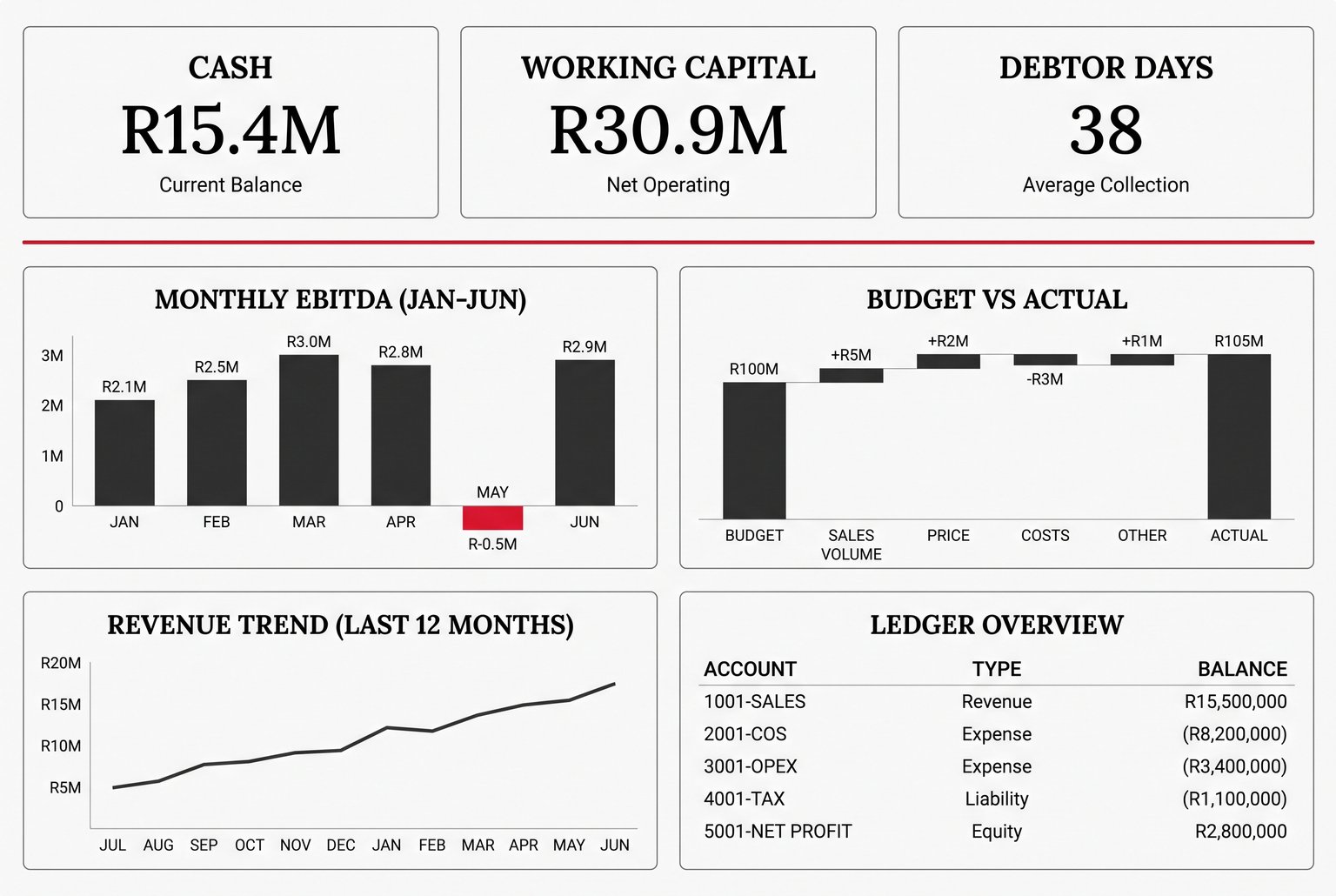
The dashboard. Cash, working capital, debtor days, EBITDA against budget. Built for the owner who reads it in two minutes.
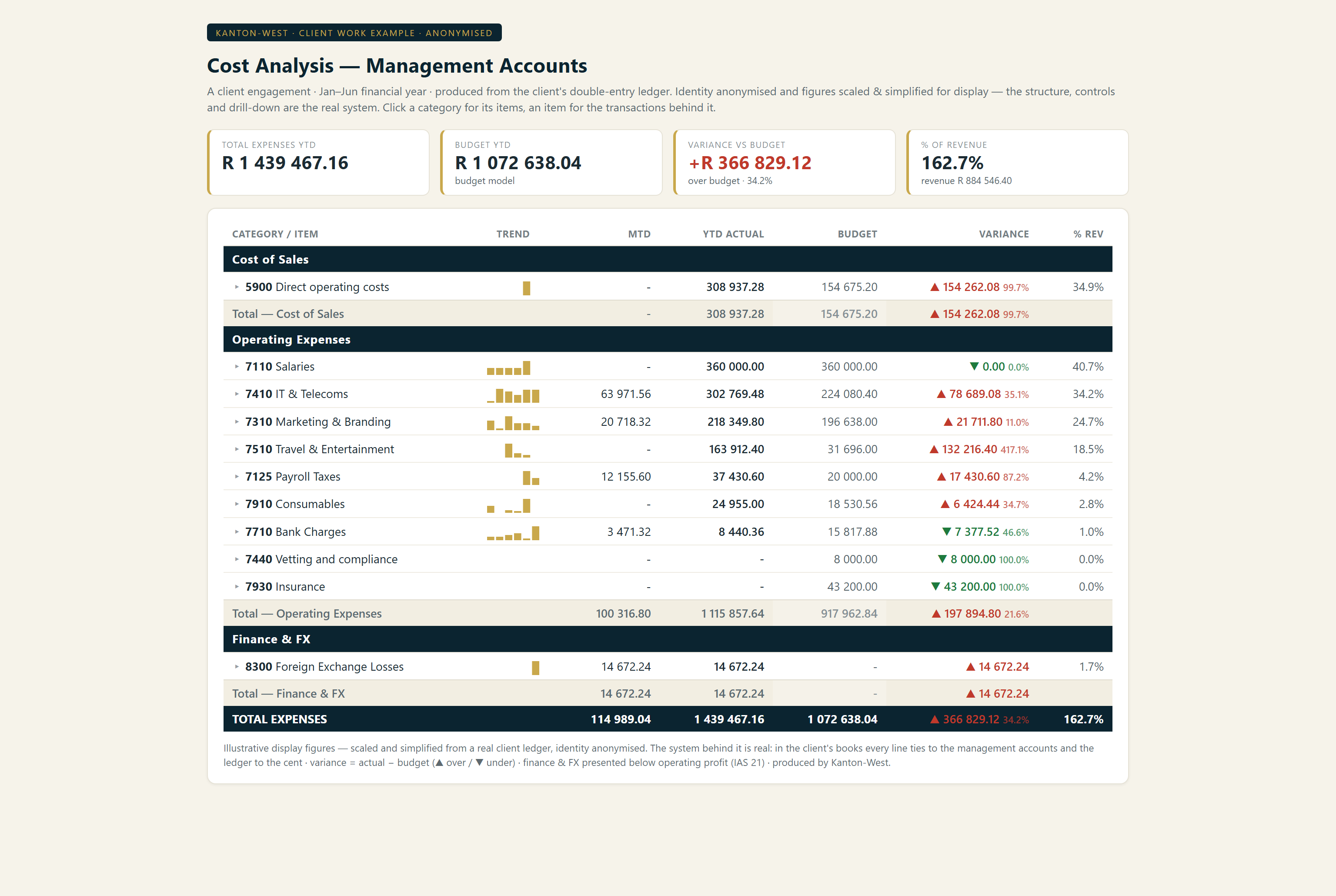
The cost analysis. Categories against budget with the variances named, straight from the management accounts.
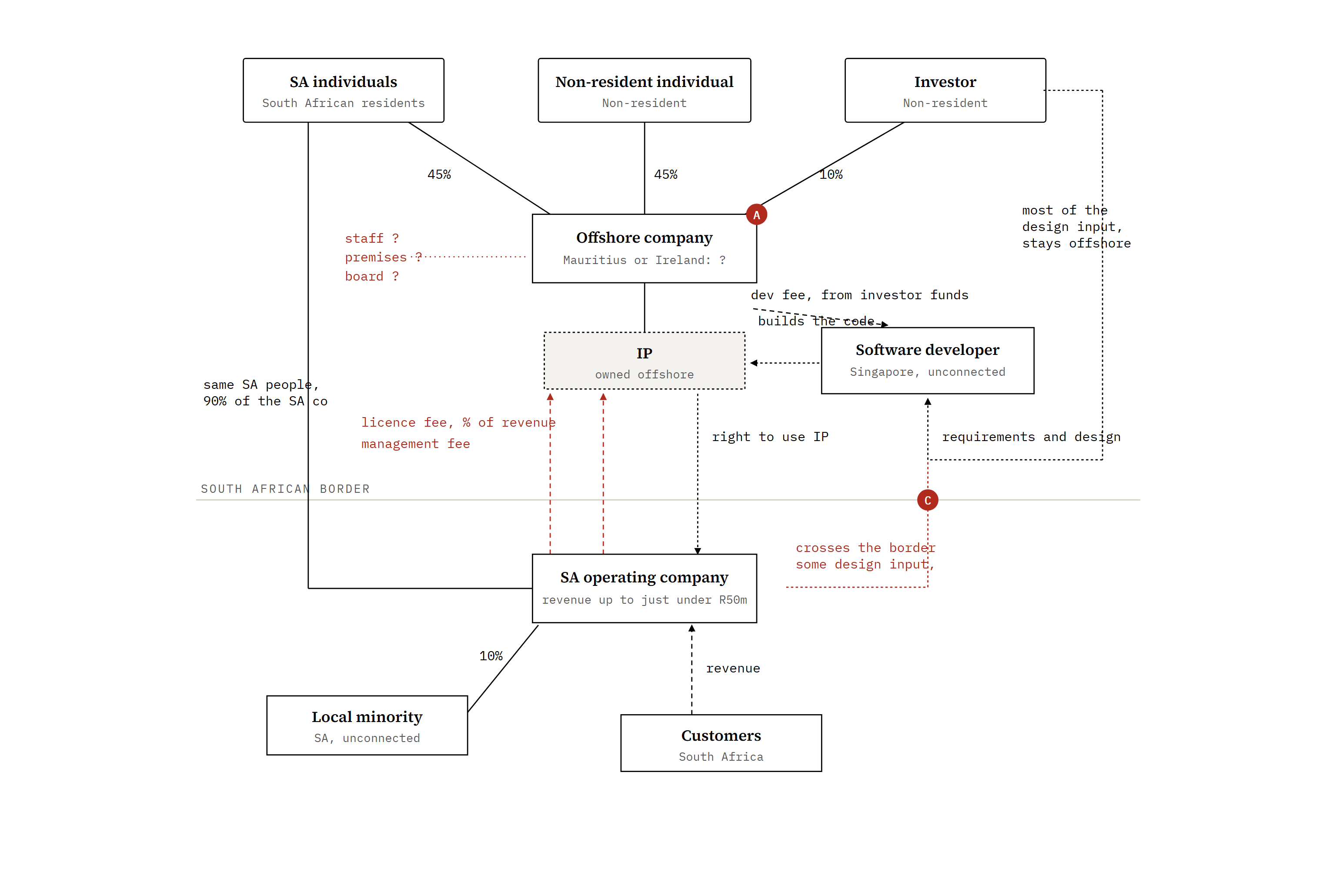
The structure. An offshore holding structure with the tax gates marked.
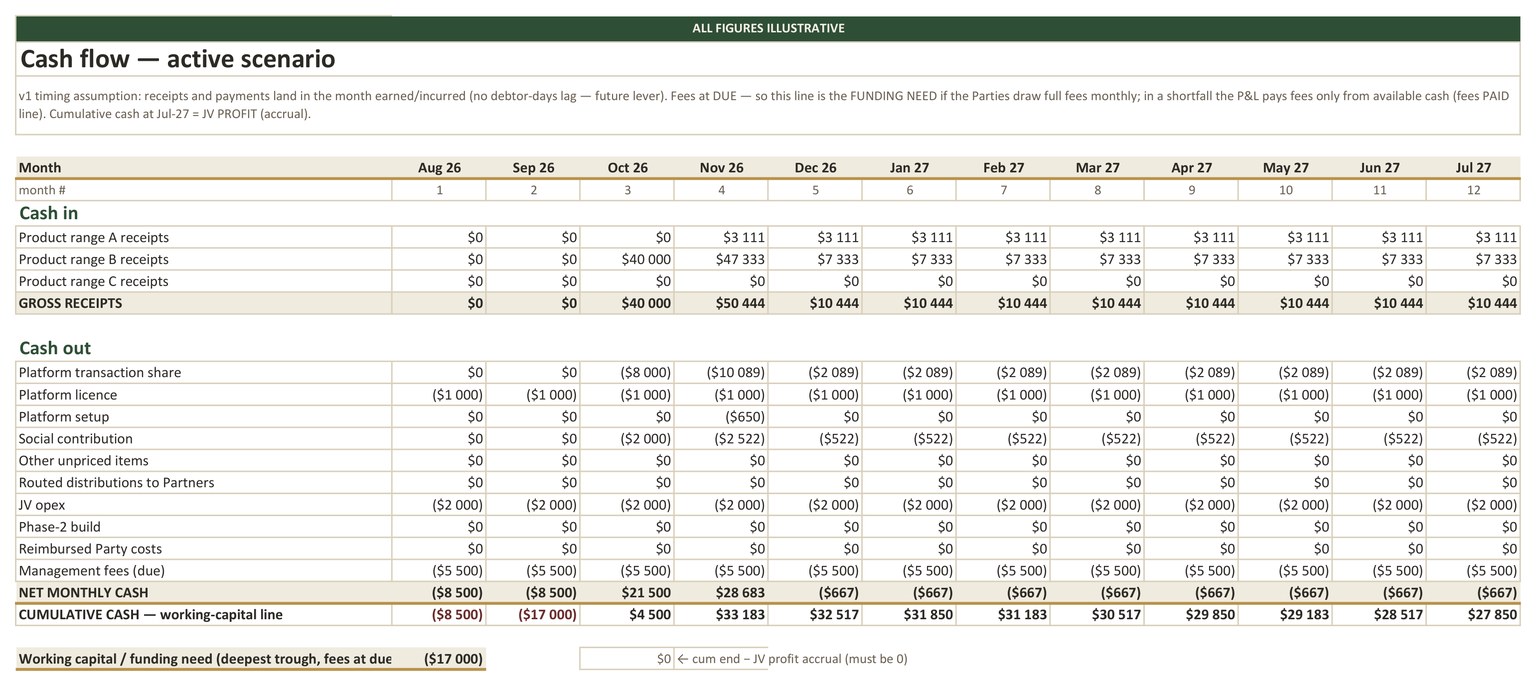
The cash flow. The cash flow sheet of a live joint venture financial model.
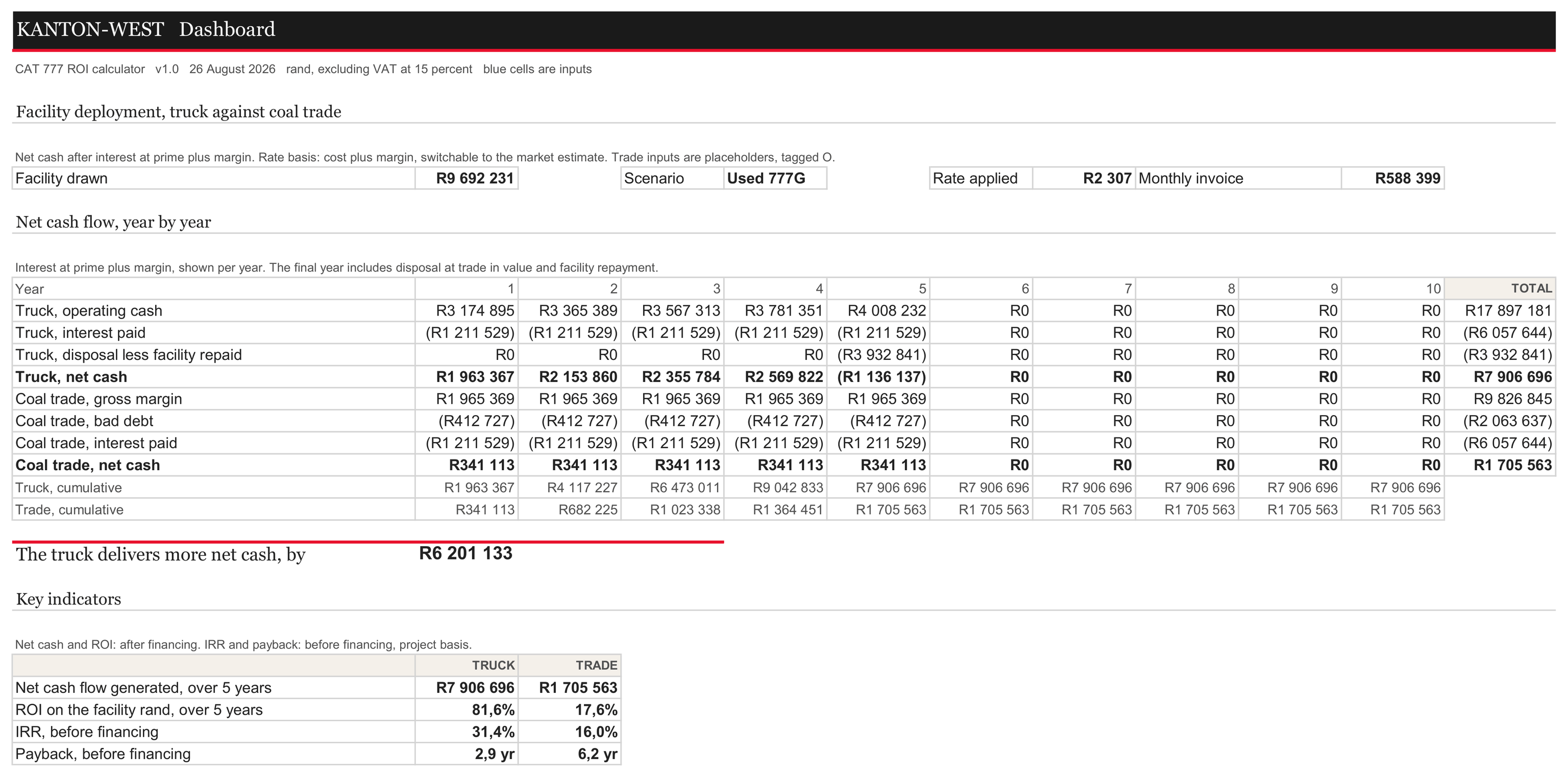
The capital model. Buy the machine on the facility, or put the same money through the trade. Cash year by year with the financing and the trade in value in it, and the answer on the front sheet.
The handover. The system live inside your walls, on screen.
Claude training, in your own work.
At your offices, with you and your team. The owner sits in it too, and usually gets the most out of it. Not a slideshow. The training runs in your own files, on work that was already going to be done that week: the month-end file, the debtor book, the board pack, the reconciliation that takes too long.
The morning covers asking properly, and putting the tool inside the actual work. The afternoon builds: everyone in the room takes one piece of their own work and leaves with it running. What gets built on the day stays in the files where it was built.
The day runs on your systems as they stand. If the Inspection has not been done, the training still lands. Putting the data right is a separate engagement, and the one thing the training cannot do is fix a wrong ledger.
Done when: everyone in the room leaves running a workflow they did not have that morning.
On your own, as a professional
An accountant, a financial manager, a bookkeeper, a consultant, a lawyer: anyone who works in documents and numbers and wants the tool inside their own job rather than beside it. It runs the same way, one to one, remote or at your desk, on your own work, not on a sample file.
Where it usually goes: getting an answer you can rely on instead of a plausible one, drafting and checking against a document rather than from memory, building the recurring thing you rebuild by hand every month, and knowing what not to put into it.
Done when: you leave with one thing you do every week running differently.
For a team
R8 500 for the day
A day at your offices, with you and your team. Priced for the training, below the advisory day rate.
For one person
Contact me for pricing
One to one, remote or at your desk. Tell me what you work on and I will quote the session.
The Process

Upskill the users
Not a classroom. At the desk, in the live work: month-end run with the person who owns it, the morning brief built together, the first model reviewed line by line. The skills stay when the engagement ends. For most teams it starts with the training day.
Done when: the team runs the workflow without me in the room.
Deliver the product
A dashboard, a reporting pack, a financial model, an automation. Scoped off the Inspection, built to run on the systems the business already owns, documented, and handed over with the walkthrough to match.
Done when: it runs on your systems and your people own it.
Hand over a finance function
One function taken end to end: the morning brief, the debtor follow-up pack, the monthly close checklist. Built, run together for a full cycle, then handed off with the file to repeat it.
Done when: the function runs a full cycle without its builder.
This page, or the enterprise page. This page is for using AI well on the systems you already have, at R5 million to R50 million turnover. The enterprise page is for owning the AI itself: private models running inside your own walls, at group scale. If the data cannot leave the building, start there.
Or take it as a course. The Board Deck Course takes one monthly job, the management figures becoming a board ready presentation, and hands you the working files to run it with Claude. Free against your email address. See the courses.
Priced like everything else here. A conversation that costs nothing, the Inspection at a fixed price, then a fixed scope with the published day rate behind it. See what it costs.